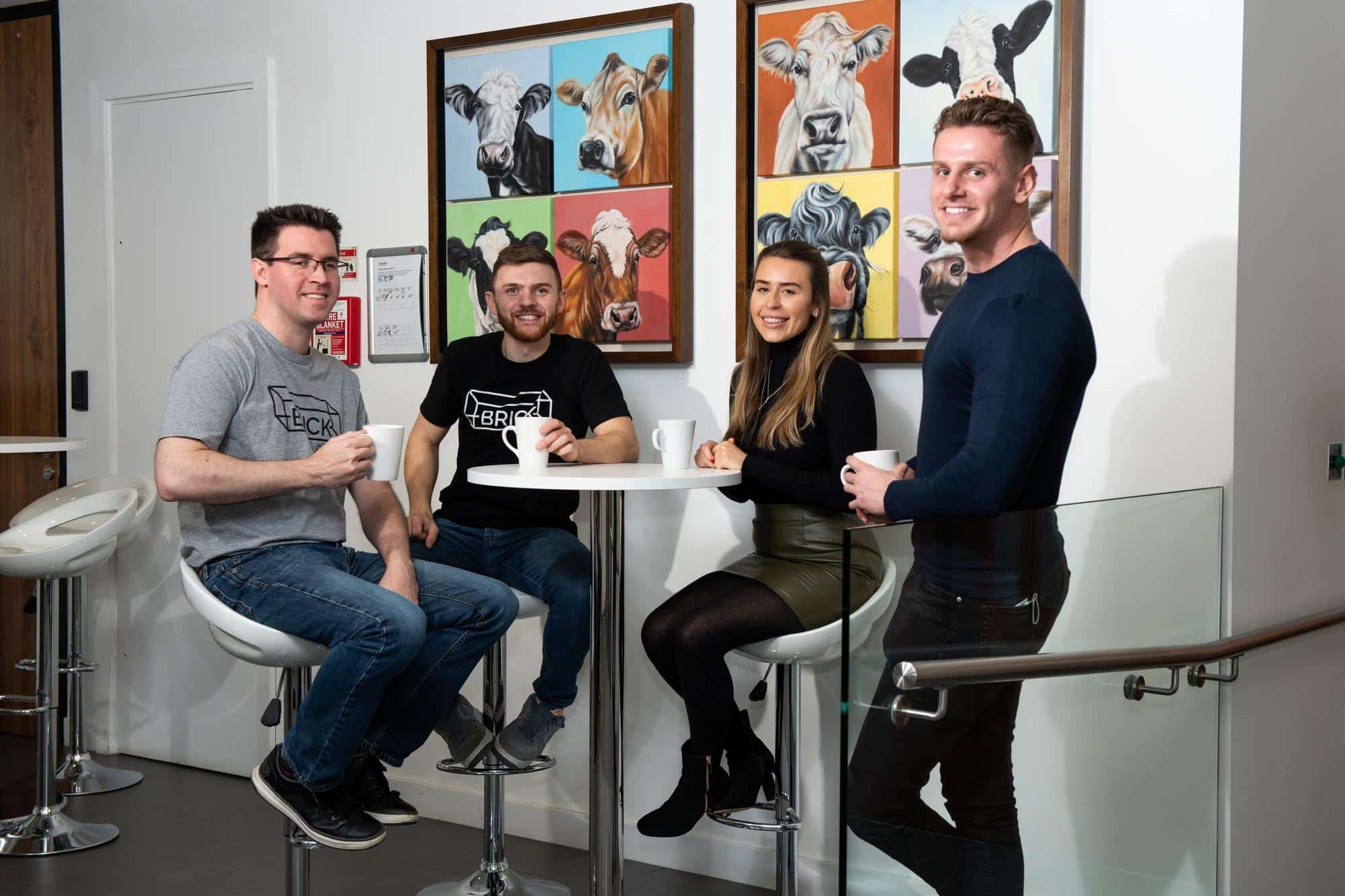
As 2025 draws to a close, it’s a natural point for the Brick Digital team to take stock – not just of what we delivered, but what we learned along the way.
For us, this past year has been shaped less by big announcements or shiny tools (although these have indeed been present!), but more by consistent execution. Across SEO, content, PR and AI Search, our year has been framed by testing ideas, measuring outcomes and staying close to what actually moves the needle.
In this blog article, the team reflects on their 2025 highlights, and shares what they’ve seen in their crystal balls when it comes to winning over AI search in 2026. Spoiler alert: humans are (thankfully) still relevant!
Adam – Head of SEO
My 2025 highlights
One of my main focuses this year has been turning the concept of E-E-A-T into something practical and measurable.
By tightening clarity, messaging and on-page structure, I’ve seen how relatively small changes in content can be the difference between sitting on page one and owning the #1 spot. This has included analysing how Google rewrites titles and descriptions in the SERPs, then reverse-engineering pages to better match search intent.
This approach helped one client capture an entire keyword cluster during their seasonal peak, delivering strong commercial returns. It also supported growth for another, contributing to an 82% year-on-year increase in organic traffic in August alone – roughly 90,000 additional clicks.
One of the biggest lessons this year has been the value of perspective. As a specialist agency working across multiple industries, Brick is often able to spot gaps and opportunities that in-house teams – usually focused on a single vertical – simply don’t see.
My predictions for 2026
Google won’t lose the AI race
Google is already aligning organic results more closely with high-quality, AI-style recommendations; likely as a response to the sheer volume of low-value content being produced. I expect this to continue, with more emphasis on pages that answer specific intent clearly, rather than broad, catch-all hubs.
AI assistance will reshape output, not replace expertise
AI has already sped up SEO workflows, and as reliability improves, I believe it will offer further help to increase the pace of high-quality output. Even so, human-led judgement, strategy and experience will still be what separates good SEO from great SEO.
Abbi – Senior SEO Executive
My 2025 highlights
One of my standout projects of 2025 was leading the SEO audit and site migration for a client launching a brand-new website.
Ahead of the August launch, we expected a short-term dip while consolidating multiple language subfolders into a single .com domain. Instead, the strategy delivered rapid gains, and within two months, core commercial terms ranked in the top five, including a #1 position for a key phrase, with organic clicks up 14% year on year by November.
Another win came from testing location-based service pages for a client. A small trial combining individual products with town-level intent drove top three rankings in their area, contributing to a 1,400% year-on-year increase in non-branded clicks and a 54% rise in organic traffic. This was a good reminder that careful experimentation still sits at the heart of strong SEO strategy.
On the tooling side, I refined an internal linking workflow using Screaming Frog’s custom search functionality, dramatically speeding up the process of finding unlinked keyword mentions and turning them into high-impact internal links.
My predictions for 2026
Relevance over volume in link building
Backlinks and citations are still important, but I think generic placements are going to decrease in impact over time. Niche relevance, tailored content and contextual fit will be what separates campaigns that perform from those that falter.
User experience will be paramount
As we move forward, I think fast, accessible and well-structured sites will be prioritised by both Google and AI crawlers; meaning that clear layouts, concise content and obvious USPs will rise to the top of the algorithmic food chain.
Granular landing pages will outperform broad terms
High-intent, niche searches are already driving stronger conversions than broad keywords. In 2026, I think detailed, purpose-built pages will outperform one-size-fits-all content hubs.
Bianca – SEO Executive
My 2025 highlights
This year I’ve seen clear, tangible SEO progress across a wide range of clients.
For one of my primary clients, focused service and location optimisation has made a real difference. Average rankings improved by 39%, with seven tracked keywords reaching #1 for the first time. Expanding into more than 20 London-focused location pages (alongside uncovering new service page opportunities) helped the site gain visibility in new areas of competition.
Scale and intent have been another focus for me, and I created over 50 new category pages for an ecommerce client, built around how people search for solutions, not just products. Alongside that, I delivered blog and service-led content across a wide mix of industries, helping strengthen relevance and reach in some very niche spaces.
My predictions for 2026
Long-tail search will accelerate
Long-tail search will accelerate
As time passes, people are becoming more comfortable searching in full, specific queries – and I expect this to continue. AI Overviews, Google’s AI Mode and tools like ChatGPT are encouraging users to be more explicit about what they need – and Google is responding by surfacing more precise landing pages.
Local intent will keep rising
As searches become more specific, local service discovery follows naturally. We’re already seeing AI-driven referrals and enquiries coming into Brick from local businesses, which suggests location-aware recommendations may play a bigger role in AI Search going forward.
Ameer – Link Building Executive
My 2025 highlights
July marked a key turning point in how Brick Digital approaches third party link building – and the results have been tangible.
We’ve always strived for quality links, but by tightening our policies even further, we’ve doubled efforts to secure links with exceptional niche relevance and deeply tailored content. This has prompted a more strategic approach to campaigns, ultimately improving them. By strengthening the alliance between content and industry, we have been able to secure placements on highly relevant publications – for me, that’s included the likes of People Development Magazine, Roofing Today and EV Compared.
We’re seeing fewer generic links, but stronger authority signals offering far greater support to rankings and visibility.
My predictions for 2026
Link quality signals will outweigh raw authority metrics
While traditional metrics like DR and traffic will continue to be used as “shorthand” indicators, I think how closely a link aligns with a site’s topical focus, audience and editorial standards will become more meaningful in the metrics of quality.
Editorial standards will rise across niche publications
As low-effort outreach and templated content becomes more widespread as a result of AI-generated content, I think niche and trade publications will become more selective about what they publish. This will favour campaigns built on tailored angles, subject-matter understanding and content that genuinely adds value, rather than volume-driven link acquisition.
Luke – Digital PR Executive
My 2025 highlights
My 2025 started strong, with a single PR campaign delivering a little over 200 articles on regional news websites across the UK – a personal career record. Volume aside, these regional news sites proved to be excellent platforms for increasing visibility.
I’ve also worked within a huge range of topics, from AI in recruitment and gender equality in motorsport to sustainable fashion for students and much, much more. It’s proved an interesting year, and one of my highlights has been the running of bespoke national polls, capturing public sentiment on key issues and giving one of my primary Digital PR clients genuinely newsworthy insights to lead with.
My predictions for 2026
Editors will push back harder on lazy AI content
As exposure increases, editors won’t need tools to spot AI-written articles. The “hallmark” formulaic phrasing and shallow insights of AI-generated content are beginning to become more evident to the naked eye, and I believe tolerance for poorly edited content will continue to fall.
Listicles will surge, then level off
Because of how AI tools approach their referencing of “Best of” listicles, I think we’ll see a spike in popularity of this type of content as a bid for visibility in AI Search. I don’t think that growth will last forever, though, and Google may start treating this format more cautiously in the future.
Reece – Senior SEO Executive
My 2025 highlights
A core theme for me this year was shifting the focus from keyword volume to search intent.
By aligning content around entity and semantic clarity – clearly explaining who a business helps, what it offers and why it matters – rankings improved without chasing keyword density. This consistently helped pages move from the bottom of page one to the top.
Commercial intent was another major factor. For a client in the EV charging sector, prioritising buyer-ready, high-value terms over high-volume keywords generated a seven-figure revenue pipeline and multiple page one rankings against well-known national competitors.
Local SEO also proved to be a powerful growth lever over the past year. For one of our clients in the events space, we were able to use their local dominance as a springboard, moving from zero visibility to market leadership across the north of the UK – opening the door to national and international opportunities.
My predictions for 2026
Local SEO will remain more stable than national campaigns
Local-focused strategies tend to weather algorithm volatility far more effectively than national SEO campaigns, and while both approaches work, setting expectations with our clients will be an important part of ensuring success.
Hybrid SEO and GEO strategies will win
As users describe their needs more precisely in AI tools, I think that combining traditional SEO with GEO will become an essential element of achieving consistent, high-converting enquiries.
Lorenzo – Founder & CEO
My 2025 highlights
From an agency-wide perspective, 2025 has been a year of steady, meaningful progress.
We were proud to see Brick recognised with two industry awards this year – validation that the work we’re doing is landing in the right way and making a positive impact. Just as importantly, we grew as a team, moving from six to eight people with the addition of two exceptional SEO Executives in Bianca and Jo, who has joined us within this past month as the newest member of the team. Strengthening the team at the right pace, without compromising standards, has been a real focus – one that will continue into next year.
Beyond client work, I’m particularly proud of the causes Brick continues to support throughout the year. This included helping The Salvation Army provide Christmas presents for children, ongoing donations to Rennie Grove Peace Hospice, and supporting three children through the SunnyDays Fund to receive specialist equipment that improves their day-to-day lives. These initiatives might sit outside of our daily business activities, but they’re an important part of our company culture and one that each of our team members believes in.
On the performance side, one of the more interesting milestones was seeing Brick itself begin to rank and attract inbound enquiries directly from AI Search tools. It may not be the flashiest headline, but it’s an early signal of where discovery is heading – and a reminder that agencies need to practise what they preach.
My predictions for 2026
A Shift in AI Search Momentum and Measurement
I expect the pace of growth for ChatGPT as a search engine to cool slightly, while Google’s AI Mode accelerates and becomes the dominant AI-driven search experience for B2C audiences in particular.
We’ll also start to see AI Search platforms launch their own analytics environments, similar to GA4 or Search Console, giving businesses clearer visibility into how AI-driven discovery contributes to traffic, visibility and conversion.
Brand Becomes a Core Search Performance Signal
More broadly, search as a channel will continue to expand in scope. Performance will be influenced by far more than traditional on-site and off-site optimisation. We’re already seeing early signs that unlinked brand mentions, reputation signals and broader online brand presence are playing a larger role. In 2026, building a recognisable, trusted brand online will have a growing impact on search performance alongside technical and content-led SEO work.
What’s Next For Brick Digital?
Looking across the year, a few patterns stand out throughout the team.
The work that delivered the strongest results was rarely the biggest or broadest. It was specific, prioritising clarity over volume, relevance over scale, and commercial impact over surface-level metrics.
This is becoming increasingly important as search continues to fragment. Between AI tools, SERPs and shifting user behaviour, there’s more activity than ever – but also more opportunity for teams willing to be precise, disciplined and honest about what works.
As we move into 2026, Brick’s approach remains deliberately grounded. We’ll continue to test ideas before scaling them, measure performance before making claims, and focus our effort where it drives real business growth.
See you in 2026!